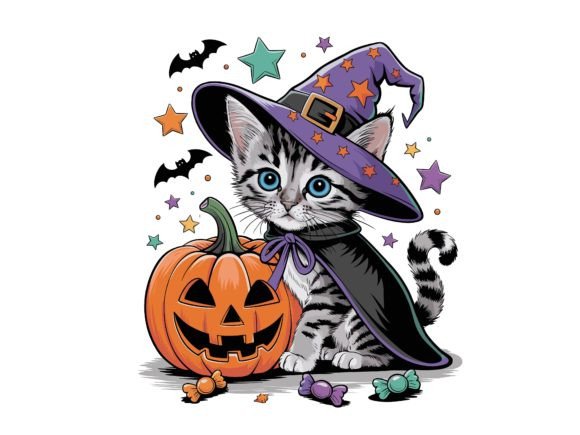
Halloween Witch Cat with Pumpkin Vector
First Impression: Playful, Not Precious — and That’s a Good Thing
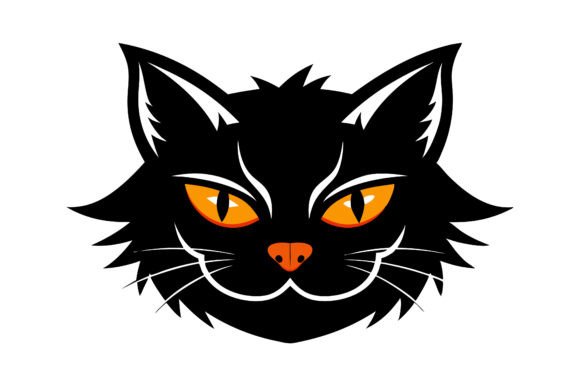
When I opened Halloween Witch Cat with Pumpkin Vector, I didn’t see “cute overload” or “overdesigned clutter.” Instead, I saw a confident, balanced silhouette: a sly black cat mid-pose, perched beside a chunky, smiling pumpkin, both wrapped in subtle witchy flair—think tiny pointed hat, not full broomstick theatrics. The vector layout is clean, with intentional negative space and generous curves—not too tight, not too sparse. It feels like a design made for stitching, not just screen display. For embroidery designers and small shop owners, that’s the first green light: this isn’t a graphic that fights the needle.
Real-World Test: A Custom Embroidered Tote Bag for a Local Bakery’s Halloween Pop-Up
Last week, I prepped Halloween Witch Cat with Pumpkin Vector for a limited-run embroidered tote bag—cotton canvas, medium weight, meant to hold cinnamon rolls and seasonal cheer. I sized it to 4.2" wide, centered on the front panel. What stood out immediately was how well the shapes translated: the cat’s ear held crispness in satin stitch, the pumpkin’s curved ridges read clearly in fill stitch without bleeding, and the shared base line kept everything grounded—not floating, not crowded. Customers loved the whimsy, but more importantly, they *trusted* it. Why? Because it looked handmade, not mass-printed. That subtle distinction matters when you’re selling a $32 tote at a craft fair or listing it on Etsy.
Where It Shines (and Where It Needs Thought)
Halloween Witch Cat with Pumpkin Vector works beautifully for:
- Sweatshirt embroidery — its bold outlines and moderate detail hold up against fleece texture and heavier thread
- Embroidered patches — clean edges mean sharp cut lines and stable backing
- Baby embroidery — no tiny eyes or fussy details that vanish at 3" scale; safe, cheerful, and wash-durable
- Holiday gifts and nursery decor — reads well on tea towels, pillow covers, and blanket corners without visual noise
- Small shop merchandise — pairs effortlessly with minimalist branding (think monochrome mugs or unbleached aprons)
But here’s where attention pays off:
- Thin or stretchy fabric? — The cat’s tail curls close to the pumpkin stem. On lightweight jersey or ribbed knit, that area needs light tear-away stabilizer + reduced top tension to avoid puckering.
- Dark fabric backgrounds? — The design has no built-in white underlay. For rich navy or charcoal apparel, add a simple running-stitch underlay beneath key outlines—or test thread contrast first.
- Curved surfaces (caps, hats)? — The horizontal orientation suits flat panels best. If adapting for a cap front, consider slight vertical compression to prevent distortion across the crown curve.
- Frequent-wash items (kitchen towels, baby onesies)? — Avoid dense fill areas unless you’ve verified stitch density. This file leans toward moderate coverage—good news—but always check your machine’s output before bulk production.
Design Assets That Build Trust — Not Just Traffic
As an embroidery product reviewer who’s seen hundreds of “Halloween” listings, I’ll say this plainly: Halloween Witch Cat with Pumpkin Vector doesn’t try to be everything. It doesn’t cram in bats, stars, or cursive slogans. That restraint makes it more versatile—and more valuable—for creative entrepreneurs. When your Etsy buyer sees this on a mockup of a cream linen pillow cover, they imagine their own home, not a generic holiday catalog. When a boutique owner adds it to a batch of organic cotton sweatshirts, it feels intentional, not opportunistic.
That impression directly affects customer trust, repeat orders, and word-of-mouth. A rushed, overworked design says “I needed something fast.” This one says “I chose this because it fits.”
Practical Embroidery Designer Notes (No Fluff, Just What You’ll Actually Do)
Before cutting thread or listing your finished product:
- Test on scrap fabric first — especially if using textured weaves or blends. Note how the cat’s whisker-like details behave (even if stylized, they’re fine lines).
- Review thread color contrast — what reads as “black cat on orange pumpkin” on screen may shift on heather grey or oatmeal fabric. Try grayscale mockups.
- Confirm hoop size compatibility — while the vector scales cleanly, your embroidery software may require resizing before digitizing. Don’t assume 5x7" is automatic.
- Inspect small details at actual stitch size — zoom into the pumpkin’s grin or the cat’s paw. Will those hold at 2.5"? If not, simplify manually or request a simplified version from the seller.
- Use proper stabilizer — medium-weight cutaway for knits, tear-away for stable wovens. Skip the “no-stabilizer” experiment—even with a clean vector, fabric movement changes everything.
- Verify licensing — since this falls under Print Templates and Graphics, confirm whether commercial use of finished embroidered goods is permitted. When in doubt, email the seller before launching your holiday collection.
Final Thought: A Design That Serves the Maker First
Halloween Witch Cat with Pumpkin Vector isn’t flashy. It won’t win awards for complexity. But it delivers something rarer in the embroidery space: quiet reliability. It’s the kind of machine embroidery design you reach for when you need to ship ten personalized gifts by Friday, when your Etsy shop gets a rush of October orders, or when you’re hand-selecting assets for your first boutique line. It respects your time, your machine, your fabric—and most of all, your customer’s eye. In a season full of visual noise, that clarity is worth more than any extra sparkle.