Halloween Cat Fighting with a Zombie
First Impression: Playful Chaos, Not Just Spooky Cliché
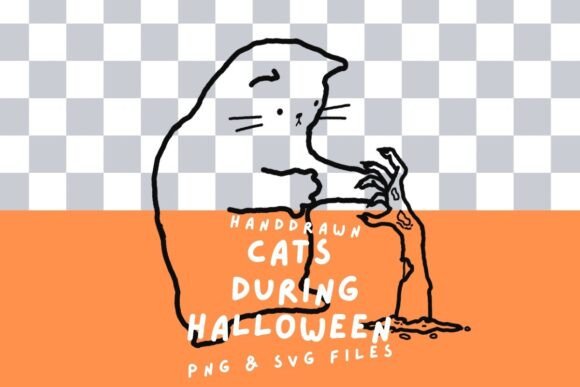
When I opened Halloween Cat Fighting with a Zombie, I didn’t see another tired pumpkin or generic bat — I saw attitude. The hand-drawn outline style gives it energy and approachability, while the cat’s arched back and the zombie’s lurching arm create real narrative tension. It’s cute *and* mischievous, not scary — perfect for customers who want Halloween spirit without the nightmares. As an embroidery designer, I immediately pictured it stitched on a natural canvas tote for a local boutique: bold enough to read at a glance, simple enough to stitch cleanly, and distinctive enough to stand out in a sea of clip-art ghosts.
Where This Design Actually Shines (and Where It Doesn’t)
Halloween Cat Fighting with a Zombie thrives in medium-to-large-scale applications where line integrity matters more than micro-detail. Think sweatshirt chest logos, embroidered pillow covers for autumn-themed nurseries, or front-of-cap placements on structured cotton twill. Its open-outline structure translates beautifully into running stitch or satin stitch borders — no dense fill areas to cause puckering or thread breakage on lightweight fabrics.
It works especially well for baby embroidery and personalized gifts: the whimsy reads as gentle, not edgy, and the clean silhouette avoids overwhelming tiny garments like onesies or bibs. On tea towels or aprons, it adds seasonal charm without competing with functional text or patterns. For Etsy sellers, this is a smart digital embroidery file to bundle with coordinating “spooky autumn” designs — it’s versatile enough to anchor a cohesive collection.
But be realistic: this isn’t a design for 2-inch hoop work on stretchy jersey tees. Those delicate claw lines and the narrow gap between cat and zombie hand need breathing room. On curved surfaces like baseball caps, test placement carefully — the composition leans left-to-right, so center-hooping may require slight repositioning to avoid distortion. And avoid pairing it with ultra-textured fabrics (like heavy bouclé or thick terry) unless you’re using strong cutaway stabilizer — fine outlines can disappear into the pile.
Stitching Reality Check: Clarity Over Complexity
What makes Halloween Cat Fighting with a Zombie practical for real-world embroidery is its intentional simplicity. There’s no nested shading, no gradient fills, no overlapping layers that demand precise color changes. That means fewer thread breaks, smoother machine runs, and faster turnaround for custom apparel orders. As a small shop owner, that’s time and thread saved — and consistency gained across dozens of tote bags or sweatshirts.
That said, don’t assume “simple” means “foolproof.” Small details — like the tip of the zombie’s finger or the cat’s ear notch — will vanish if stitch density is too low or thread contrast is poor. Always test on scrap fabric first, especially when stitching on dark fabric. Try it in black thread on navy cotton and white thread on charcoal fleece — you’ll quickly see which version holds the shape best. Also check how it looks in a black-and-white printable mockup before listing it on Etsy; some buyers rely solely on those previews to judge clarity.
Design Assets That Build Trust — Not Confusion
Customers notice when handmade products look professionally resolved. A crisp, confident Halloween Cat Fighting with a Zombie on a linen pillow cover tells them you care about craft — not just commerce. But inconsistency undermines that. If your version stitches with jagged corners or uneven line weight, it reads as rushed, not charming. That’s why reviewing the embroidery file’s vector origin matters: hand-drawn doesn’t mean poorly digitized. Look for smooth bezier curves, balanced negative space, and intentional stroke weight — all things that support clean satin or running stitch execution.
For craft business owners, this design also supports brand consistency. Its autumnal-but-not-pumpkin-specific vibe fits seamlessly into broader seasonal collections — think “harvest,” “mystic woods,” or “midnight garden” themes — without locking you into one holiday. And because it’s rooted in illustration rather than photorealism, it scales well across formats: from a 4-inch embroidered patch to a 12-inch heat-transfer mockup for social media.
Smart Usage Notes Every Embroiderer Should Keep Handy
- Test before you commit: Run Halloween Cat Fighting with a Zombie on scrap fabric matching your final product’s weight and stretch.
- Stabilizer is non-negotiable: Use medium-weight cutaway for knits, tear-away for stable wovens — skip it, and those fine outlines will warp.
- Thread color strategy: High-contrast pairings (e.g., lime green on black, deep plum on cream) maximize readability without adding complexity.
- Hoop size matters: Aim for at least a 4×4 hoop minimum — smaller hoops force compression that blurs gesture and proportion.
- Licensing first: Confirm whether the Graphics license permits commercial embroidery use — especially if selling finished products or bundling as part of a digital embroidery file pack.
- Think beyond the hoop: This design adapts well to applique design layouts, iron-on transfers, or even simplified screen-print versions for bulk merchandise.
Final Thought: A Design That Earns Its Place
Halloween Cat Fighting with a Zombie isn’t just another seasonal doodle — it’s a thoughtful piece of visual storytelling built for making. It balances personality with practicality, charm with clarity, and fun with function. Whether you’re stitching custom baby embroidery for a first Halloween, prepping holiday gifts for your craft fair booth, or building a signature line of embroidered tote bag designs, this illustration earns its spot in your workflow. Just remember: great embroidery starts with honest evaluation — not just hoping the design will “work out.” Test it, trust your eye, and let the cat and zombie do the rest.