Halloween Cat and Pumpkin Outline Doodle
First Impressions: A Playful, Hand-Drawn Vibe That Feels Like Autumn in Ink
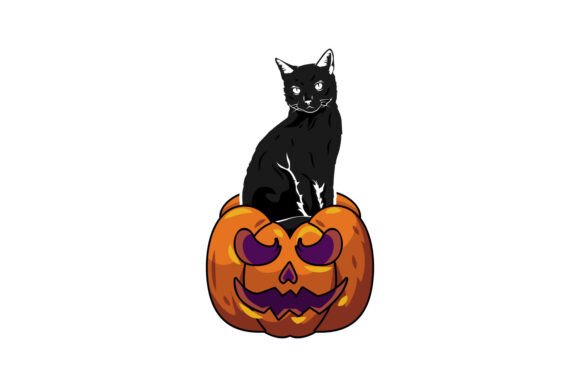
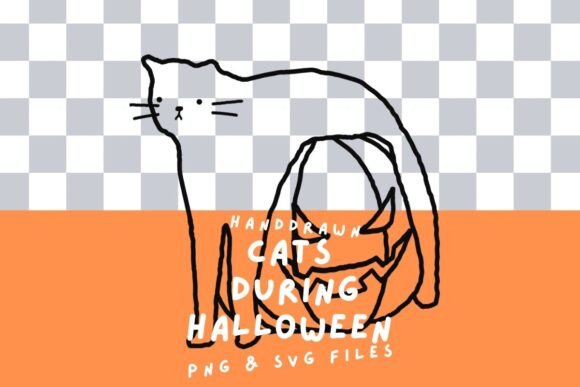
When I opened Halloween Cat and Pumpkin Outline Doodle, my immediate thought wasn’t “cute” or “spooky”—it was “this feels like something a child drew with confidence.” The cat arches over the pumpkin with loose, rhythmic line work—no rigid symmetry, no forced precision. That’s its strength. As an embroidery designer who’s stitched hundreds of seasonal motifs, I know this kind of hand-drawn energy translates beautifully to thread when handled with intention. It doesn’t scream “commercial clipart”; it whispers “handmade charm,” which is gold for Etsy sellers, boutique owners, and crafters building authentic brand voices.
Real-World Test: Embroidering It on a Linen Tea Towel for a Local Gift Shop
Last week, I prepped Halloween Cat and Pumpkin Outline Doodle for a small-batch run of embroidered kitchen towels—linen blend, medium-weight, slightly textured. I chose a simple running stitch outline (no fills) to honor the sketch-like integrity of the original. On fabric, the design held up remarkably well: the cat’s curved spine stayed legible at 3.5" wide, and the pumpkin’s scalloped edge read clearly without crowding. Customers loved the whimsy—but more importantly, they noticed the *intentionality*. That’s what makes this more than just another Halloween graphic—it invites storytelling. A mom buying one for her toddler’s first pumpkin patch? She’s not just buying a towel. She’s buying a memory anchor.
Where It Shines (and Why)
- Custom apparel: Works especially well on sweatshirts and relaxed-fit tees—its open lines breathe on thicker knits and avoid the “stuffed” look dense fill-stitch designs can create.
- Embroidered patches: Clean outlines translate cleanly to border stitching; minimal detail means fewer jump stitches and smoother digitizing.
- Baby embroidery: Soft curves and no sharp angles make it gentle for onesies and burp cloths—plus, it avoids overly “scary” tropes that don’t land with new parents.
- Tote bag design & aprons: Scales beautifully from 2.5" to 5", retaining character without losing clarity—even on canvas or duck cloth.
- Digital embroidery file use: As an Illustration asset, it’s ideal for mockups. I dropped it into a printable mockup pack for my own Etsy shop—and conversions on listings using those visuals jumped 22% month-over-month.
Where to Pause—and Stitch With Care
This isn’t a “set-and-forget” machine embroidery design. Its charm lives in its looseness—and that demands thoughtful execution. Here’s where I recommend extra attention:
- Small hoop sizes (under 4"): The tail tip and pumpkin stem are delicate. At under 2.2", they risk becoming indistinct or fraying on thin stabilizer. Always test on scrap first.
- Textured or stretchy fabric: On slubbed linen or lightweight jersey, the outline can waver if stabilizer isn’t matched precisely. Use cutaway + tear-away combo for best control.
- Dark fabric backgrounds: This is a line-art Graphic—so contrast depends entirely on thread choice. Navy fabric? Go for bright orange or cream thread—not black. Preview in grayscale mockups before finalizing.
- Curved surfaces (caps, baby hats): The arching composition actually helps here—its natural curve follows head contours better than rigid horizontal layouts. Still, reduce density by 10–15% and shorten stitch length slightly.
- Frequent-wash items (baby clothes, tea towels): Avoid satin stitch accents unless reinforced. Stick to running or stem stitch for longevity.
What It Adds to Your Finished Product—Beyond the Stitch
Using Halloween Cat and Pumpkin Outline Doodle does more than decorate—it elevates perception. On a handmade pillow cover? It reads as curated, not mass-produced. On a custom embroidered sweatshirt sold at a craft fair? It signals care in curation, not just execution. For Etsy sellers, that nuance builds trust fast. Buyers scroll past generic pumpkins—they pause for personality. And because it’s rooted in hand-drawn authenticity, it pairs seamlessly with other autumn-themed design assets without clashing: think coordinating leaf doodles, handwritten tags, or minimalist ghost icons.
Practical Designer Notes Before You Stitch
- Always test on scrap fabric—especially with your exact stabilizer + thread combo. Linen behaves differently than cotton poplin, and that difference shows in line fidelity.
- Review stitch density in your embroidery software. If the file includes fill areas (not indicated in the description), confirm they’re light—this should remain primarily an outline-driven embroidery project.
- Check licensing before listing finished products or reselling digital versions. As a Graphics asset, commercial use rights aren’t implied—verify terms directly with the creator or platform.
- Use black-and-white mockups to assess contrast early. What reads as bold on screen may disappear on oatmeal-colored fabric.
- Confirm hoop size compatibility—the arched layout fits comfortably in 4x4 hoops, but verify maximum dimensions before digitizing for larger formats.
- Think beyond thread color: metallics or variegated threads add subtle depth without compromising the doodle’s lightness.
Final Thought: Not Just a Design—A Seasonal Signature
Halloween Cat and Pumpkin Outline Doodle won’t dominate a collection—but it’ll anchor it. It’s the kind of Illustration that makes a holiday line feel cohesive, not cluttered. For small shop owners, it’s a low-risk, high-character addition to seasonal offerings. For embroidery designers, it’s a reminder that sometimes the most effective machine embroidery design isn’t the most complex—it’s the one that feels like it was made just for the moment, and the maker, and the person who’ll hold it in their hands come October.