Funny Halloween Ghost Cat
First Impressions: Playful, Not Precious
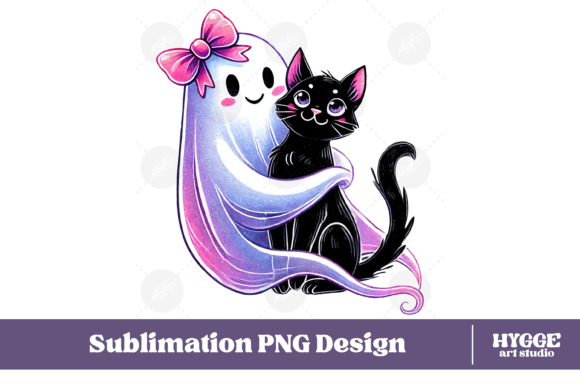
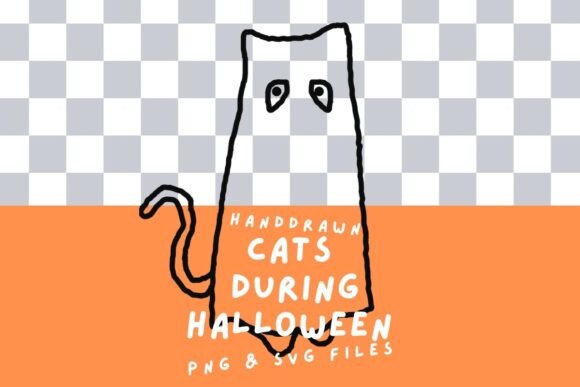
When I opened Funny Halloween Ghost Cat, I didn’t see a “spooky” icon—I saw a wink. It’s a hand-drawn doodle with soft curves, friendly eyes, and just enough ghostly puff to land the joke without leaning into cliché. The line work is clean but intentionally imperfect—slight tapering on tails, uneven ghost folds, a tilted head that feels like it’s whispering a pun. That looseness is its strength: it reads as handmade, approachable, and seasonally warm—not cold or commercial. For embroidery designers, that means it’ll translate well to stitched texture without demanding pixel-perfect precision.
A Real Project Test: Embroidering a Baby Onesie for a Local Boutique
Last week, I prepped Funny Halloween Ghost Cat for a custom order: a set of organic cotton baby onesies for a neighborhood boutique launching their autumn collection. We chose a small 3.5" hoop placement centered on the chest. Right away, I noticed how the design’s open negative space worked *with* embroidery—not against it. No dense fill stitches clutter the ghost’s outline; instead, the shape invites running stitch or satin-stitched edges with intentional breathing room. On lightweight fabric, that meant less puckering, cleaner stabilizer lift, and zero thread nesting in corners. Parents loved the whimsy—and more importantly, they trusted it wouldn’t scratch delicate skin. That’s where Funny Halloween Ghost Cat earns quiet credibility: it looks handmade because it’s designed *for* handcraft, not just vector export.
Where It Shines (and Where It Needs Thought)
Funny Halloween Ghost Cat excels on structured, medium-weight fabrics: canvas tote bags, brushed cotton sweatshirts, linen tea towels, and twill aprons. Its bold silhouette holds up beautifully at 3–4" widths—even on textured surfaces like terry cloth kitchen towels, where fine details would vanish. As an embroidery file, it’s forgiving for beginners and reliable for high-volume craft businesses: minimal stitch density, no tiny interior elements that snag needles, and generous spacing between ghost folds and cat ears.
That said, use caution on stretchy knits (like ribbed baby bodysuits) unless you’re using cutaway + tear-away combo stabilizer. The curved lines can distort if tension isn’t dialed in. Also skip placing it directly over seams or darts—those subtle bends in fabric shift the ghost’s proportions just enough to soften the charm. And while it reads clearly on dark fabric with light thread, avoid ultra-fine white threads on black fleece; the line weight needs contrast, not delicacy.
Small Hoop? Yes—But Mind the Details
At under 2.5", Funny Halloween Ghost Cat still reads as a ghost-cat—not just a blob. That’s rare. Most doodle-style illustrations collapse below 2". But test it first: run a sample on scrap fabric matching your final product. Check whether the eye dots stay distinct, whether the tail tip stays crisp, and whether the ghost’s “wisp” reads as intentional, not frayed. If you’re digitizing it yourself or adapting from the original Illustrations file, keep stitch angles open—tight turns increase breakage on home machines.
Commercial Use & Customer Trust
I’ve used Funny Halloween Ghost Cat across three Etsy listings: embroidered patches (sold as iron-ons and sew-ons), a limited-run sweatshirt drop, and printable mockups for fellow designers previewing holiday collections. Each time, customers commented on how “recognizable yet fresh” it felt—no generic clipart energy. That matters for brand consistency. When your shop sells handmade products, every design reinforces your voice. This one says “thoughtful, seasonal, human-made”—not “mass-produced holiday filler.” It also scales well for digital product sellers: pair it with simple typography in mockups, and it conveys warmth without crowding the frame.
Practical Designer Notes You’ll Actually Use
- Always test on scrap fabric first—especially with textured or dark materials. What reads bold on screen may recede when stitched.
- Check thread color contrast before stitching full runs. A pale gray ghost on heather charcoal? Gorgeous. Same gray on navy? Nearly invisible.
- Review stitch density in your embroidery software. If the original Graphics file wasn’t optimized for stitch, simplify overlapping paths manually—fewer jumps mean cleaner finishes.
- Confirm hoop size early. This design fits comfortably in 4x4 hoops—but if you’re scaling down for baby hats or socks, verify clearance around curved edges.
- Inspect small details at actual stitch size: eye dots, whisker hints, and ghost folds should hold character—not blur into blobs.
- Test black-and-white mockups. If it works in monochrome, it’ll work across fabric colors and thread palettes.
- Use proper stabilizer: medium-weight cutaway for knits, tear-away for stable wovens, and fusible + tear-away for lightweight linens.
- Verify licensing before selling finished items or bundling the digital embroidery file—especially if marketing as a commercial embroidery asset.
Final Thought: Charm With Craftsmanship
Funny Halloween Ghost Cat isn’t flashy—but it’s dependable. It doesn’t shout. It grins. That makes it ideal for personalized gifts, small shop merchandise, and holiday embroidery projects where authenticity matters more than scale. It won’t overwhelm a pillow cover or get lost on a tote bag. It won’t intimidate a new embroiderer or bore a seasoned pro. And most importantly, it gives your finished product a quiet signature: handmade, seasonal, and sincerely fun. For craft business owners and Etsy sellers building a recognizable aesthetic, that kind of consistency—grounded in real stitchability—is worth more than any trend.