Egyptian Cat T-Shirt Design
A Designer’s First Glance: Bold, Timeless, and Surprisingly Versatile
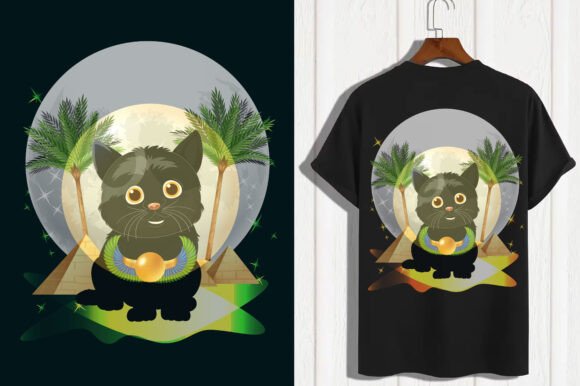
When I opened the Egyptian Cat T-Shirt Design for the first time, I didn’t see just a graphic—I saw a mood. Clean linework, confident silhouette, and that unmistakable blend of ancient reverence and feline grace. It’s not overly ornate, but it carries weight—like something carved into limestone, then softened for modern wear. The cat faces forward, ears upright, tail curled with quiet authority. No clutter, no filler. Just presence. That makes it instantly promising for embroidery—not as a dense, stitch-heavy piece, but as a strong, readable motif that holds up across scales and surfaces.
How It Actually Stitches: Real-World Testing on a Custom Tote Bag
Last week, I used the Egyptian Cat T-Shirt Design to embroider a medium-weight canvas tote for a local boutique’s summer launch. We chose a 4-inch hoop, medium-cutaway stabilizer, and matte cotton thread in deep terracotta and charcoal. What stood out wasn’t just how cleanly the outline stitched—it was how the design *breathed*. The curves held their shape, the eye detail stayed legible at that size, and the negative space around the cat gave the stitching room to land without crowding. This isn’t a design that fights your machine; it cooperates. It works especially well as a machine embroidery design for custom apparel where clarity matters more than complexity—think sweatshirt embroidery on crewnecks, baby embroidery on organic cotton onesies, or embroidered patch production for craft fair vendors.
Where It Shines—and Where You’ll Want to Pause
The Egyptian Cat T-Shirt Design naturally excels on stable, flat surfaces: tote bag design, pillow covers, tea towels, aprons, and even structured caps (if digitized with proper underlay and reduced density). Its balanced proportions mean it reads well both centered and off-center—ideal for asymmetrical placements on sleeves or hems. For holiday embroidery or nursery decor, it adds subtle cultural warmth without leaning into cliché.
But—and this is key—don’t rush it onto thin or stretchy fabric without testing. On lightweight jersey or ribbed knit, the clean lines can blur if stabilizer choice or hooping tension isn’t dialed in. Likewise, avoid cramming it into hoops smaller than 3.5 inches: the tail curl and inner ear details begin to lose definition. And while the vector files give you flexibility, remember that turning this into an applique design requires thoughtful placement of satin stitch borders and careful seam allowance planning—especially for patches meant to be ironed on.
Dark Fabric? Light Fabric? Here’s What You’ll Notice
I ran side-by-side tests on black denim and ivory linen. On dark fabric, the Egyptian Cat T-Shirt Design gains gravitas—almost hieroglyphic. But thread color contrast becomes non-negotiable. A light gold or cream thread pops beautifully, while pale grey disappears. On light fabric, richer tones like indigo or burnt umber deepen the sense of antiquity. Always test in black and white mockups first—what looks balanced on screen may stitch too densely or fade visually once stitched.
What It Does for Your Craft Business—Beyond the Stitch
As an Etsy seller and small shop product developer, I pay close attention to how a design affects buyer trust and perceived value. The Egyptian Cat T-Shirt Design reads as intentional—not generic, not clip-art. That matters. Customers browsing handmade product listings respond to authenticity, and this design delivers it. It elevates a plain sweatshirt into something collectible. It turns a baby onesie into a personalized gift with quiet storytelling. It fits seamlessly into boutique branding that values heritage, craftsmanship, and understated elegance.
For digital product sellers, this is solid design assets material—but only if licensing allows commercial use of finished items. Since the listing states the files can be used for printing on fabric, screen printing, and digital printing, confirm whether that extends to embroidered finished products before listing on Etsy or wholesale platforms. When in doubt, reach out to the creator.
Practical Notes Every Embroidery Designer Should Keep Handy
- Always test the Egyptian Cat T-Shirt Design on scrap fabric first—especially if switching between cotton, linen, or blends.
- Check thread color contrast early. This design relies on silhouette and proportion, not shading—so mismatched thread can mute its impact.
- Review stitch density. Even though it’s vector-based, embroidery files vary. Look for excessive fill stitch in the body or tail—if present, reduce density to prevent puckering on lighter fabrics.
- Confirm hoop size compatibility before digitizing or resizing. Not all machines handle tight curves equally well at tiny scales.
- Inspect small details: the inner ear line, the curve of the tail tip, and the eye shape. These define character—and vanish if scaled down carelessly.
- Use proper stabilizer. Medium-cutaway for woven fabrics, tear-away for stable knits, and fusible + cutaway for layered or textured surfaces like towels or blankets.
- Test on both light and dark backgrounds using printable mockups—this reveals visual hierarchy issues no screen preview catches.
- Verify commercial use terms before selling finished embroidered items or reselling the digital embroidery file.
Final Thought: A Design That Earns Its Place
The Egyptian Cat T-Shirt Design doesn’t shout. It doesn’t need to. It’s the kind of graphics piece that grows with your work—the more you use it thoughtfully, the more its versatility reveals itself. Whether you’re stitching a single holiday embroidery gift for a friend or building a cohesive collection for your craft business, it holds its ground. It feels handmade, even when machine-stitched. It feels timeless, even on trend-driven apparel. And most importantly, it invites intention—not just application. That’s rare. And worth keeping in your working library.