Black Silhouette of a Curled Cat
A Quiet, Confident Shape — Perfect for Thoughtful Embroidery Projects
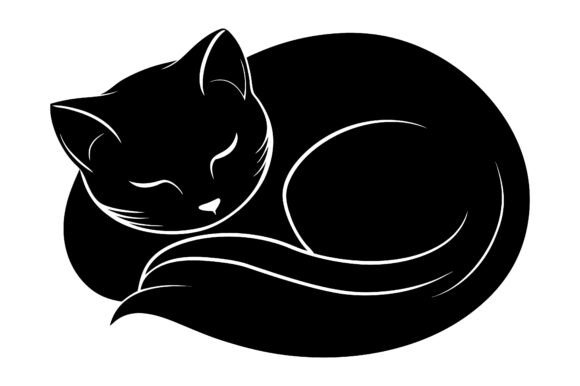
First glance at Black Silhouette of a Curled Cat tells you everything you need to know: it’s calm, intentional, and deeply tactile in its simplicity. There’s no fussy line work, no exaggerated whiskers or stylized eyes—just a clean, continuous contour that suggests warmth, rest, and quiet presence. As an embroidery designer who’s stitched hundreds of animal motifs—from playful pups to intricate foxes—I immediately recognized how well this shape translates to thread. It doesn’t fight the needle; it invites it. That soft, inward curve? It’s built for satin stitch flow. The compact silhouette? Ideal for small hoop sizes without sacrificing recognition.
Where This Design Truly Shines in Real-World Use
Last week, I used Black Silhouette of a Curled Cat to embroider a set of linen kitchen towels for a local boutique. No appliqué, no layered fills—just a single-color black thread on natural off-white fabric, stabilized with medium-weight cutaway. The result was striking: subtle enough for daily use, yet distinctive enough to spark conversation. Customers kept asking, “Is that a real cat?” not because it’s hyper-realistic, but because the posture feels *lived-in*. That same design worked just as well on a baby onesie (using soft tear-away stabilizer), a cotton tote bag (with slightly denser fill stitch to hold up to washing), and even as a minimalist patch sewn onto a denim apron.
It’s especially effective for small business branding—think embroidered crests on café napkins, boutique gift tags, or custom sweatshirt backs for a pet-friendly yoga studio. Because it’s a Graphics-type asset—not a photo or complex illustration—it scales cleanly across print materials mockups, digital previews, and physical stitching alike. Etsy sellers will appreciate how easily it converts from a listing thumbnail to a finished product photo without visual noise.
Use With Care: When Simplicity Needs Smart Support
Don’t assume minimalism means zero prep. On stretchy fabrics like jersey or lightweight knits, that smooth outer edge can blur if stabilizer isn’t firm enough—especially around the tail curl, where tension shifts. I recommend testing Black Silhouette of a Curled Cat on scrap fabric first, using your exact thread and stabilizer combo. Also keep an eye on dense stitch areas: while the design itself is low-detail, some versions may pack extra underlay in curved zones. If you’re stitching on dark fabric, confirm contrast—black-on-charcoal can vanish unless you add a white underlay or switch to charcoal thread on cream fabric.
Curved surfaces like caps or hats demand extra attention. That gentle arc works beautifully on flat panels (tote bags, pillow covers, tea towels), but on a rounded crown, the bottom edge may distort unless you adjust placement or use a smaller scale. Likewise, avoid placing it too close to seams or hems on thin fabrics—stitch density can cause puckering. And while it’s lovely on nursery decor or holiday gifts (think embroidered stockings or baby blankets), remember: frequent washing requires secure backing and tight stitch tension. A loose running stitch outline won’t hold up like a well-digitized satin border.
Why This Design Builds Trust—Not Just Texture
In handmade product markets, customers don’t just buy cats—they buy intention. Black Silhouette of a Curled Cat reads as considered, not generic. It avoids cartoonish exaggeration, so it fits equally well on a wedding guest book cover, a therapist’s office pillow, or a craft fair mug sleeve. That consistency builds brand trust. When your Etsy shop features this motif across embroidered patches, printable mockups, and digital design assets, buyers sense cohesion—not randomness.
It also elevates perceived value. A plain black cat on a grey sweatshirt reads as premium, not basic—because the shape carries weight. No need for glitter or metallic thread to stand out. That said, don’t skip the basics: always check licensing before selling finished items or bundling Black Silhouette of a Curled Cat into digital embroidery kits. Since the listing mentions “Welcome To My Shop” and lists use cases like t-shirts, mugs, and business cards, confirm whether commercial use is included—and whether it’s sold as a machine embroidery design file, vector graphic, or raster image. Those distinctions affect scalability, digitizing effort, and final stitch quality.
Practical Designer Notes Before You Stitch
- Test first—run it on scrap fabric matching your project’s weight and stretch.
- Check thread color contrast on both light and dark backgrounds before finalizing.
- Review stitch density—if your version includes heavy underlay, reduce it slightly for lightweight fabrics.
- Confirm hoop size—this design fits comfortably in a 4x4 hoop, but verify before hooping delicate items like baby caps.
- Inspect small details—the inner curve of the tail and ear tips should remain crisp, not fuzzy or over-stitched.
- Try black-and-white mockups to assess clarity without color distraction.
- Match stabilizer to fabric: cutaway for knits, tear-away for stable wovens, fusible for lightweight linens.
- Verify licensing for both personal and commercial embroidery projects—especially if reselling finished goods or digital embroidery files.
Final Thought: A Design That Rests Well—And Works Harder Than It Looks
Black Silhouette of a Curled Cat isn’t flashy. It doesn’t shout. But in embroidery—where every stitch carries time, care, and cost—that quiet confidence is rare. It stitches cleanly, photographs beautifully in Print Materials Mockups, and resonates across audiences: from craft hobbyists making personalized gifts to small shop owners building cohesive merchandise lines. Whether you’re digitizing it for a client’s custom apparel order or dropping it into a digital product bundle for fellow Etsy sellers, it holds its ground without demanding attention. That’s not minimalism—it’s maturity. And in the world of handmade product design, that kind of restraint is worth its weight in thread.